
AI Web Design and SEO. How Smart Tools Improve Layouts and Rankings

A website can look polished and still fail. Pages load slowly, visitors miss the next step, search engines struggle to understand the structure, and beautiful layouts sit quietly with weak traffic.
AI is changing that work from guesswork into a faster cycle of testing, learning, and improving. Designers can generate layout ideas in minutes. Developers can catch performance issues before launch. SEO teams can find content gaps, refine internal links, and spot technical problems that used to take hours of manual review.
The best part is not that AI replaces web teams. It helps them see patterns sooner and make better choices with less waste.

AI now shapes how layouts are planned and tested
Good web design has always involved trade-offs. A homepage needs visual appeal, but it also needs clarity. A product page needs rich detail, but it cannot feel crowded. A landing page needs strong calls to action, but it should not overwhelm the visitor.
AI helps teams compare those trade-offs faster. Modern design tools can suggest layout options based on content type, screen size, and user flow.
These tools are useful at the early stage because blank pages slow teams down. Instead of starting with nothing, a designer can ask for a landing page structure for a local service, a SaaS pricing page, or an editorial article layout. The result will still need editing, but it gives the team something concrete to judge.
Moving a key button higher on the page
Breaking a long form into smaller steps
Reworking a navigation menu that visitors ignore
Reducing visual clutter near a conversion point
Reordering content based on what users actually read
The value sits in the feedback loop. AI can show what people do, not just what the team hoped they would do.
Better user experience starts with better signals
User experience is no longer only about style. Search engines and visitors both reward sites that are fast, clear, and easy to use.
AI tools can read signals across many pages and surface problems that are hard to catch manually. A team may know that one page feels slow, but an AI-assisted audit can reveal patterns across templates, images, scripts, and layout shifts.
AI can also help with accessibility checks. Tools can flag missing alt text, weak colour contrast, unclear labels, or headings that skip levels. Human review still matters, especially for screen reader experience and real-world usability, but AI can catch many common issues before they reach visitors.
A smoother experience often comes from small fixes:
Clearer headings
Shorter paragraphs
Faster image loading
Better mobile spacing
Larger tap targets
Simpler forms
More consistent navigation
These are not flashy changes, but they matter. If visitors can understand a page quickly, they are more likely to stay, read, click, buy, book, or subscribe.
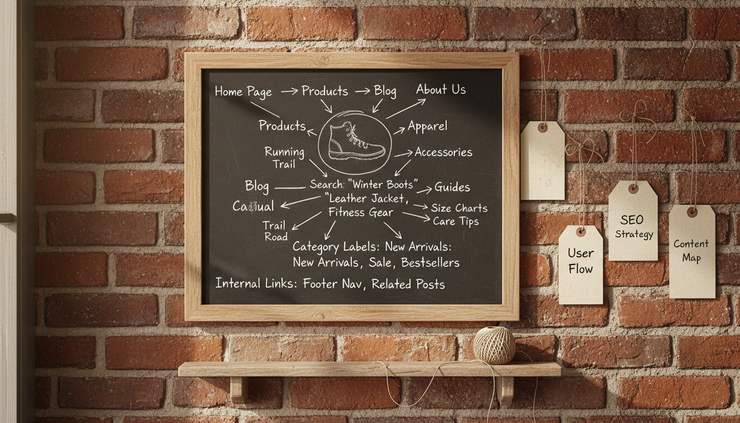
AI gives SEO teams a clearer map of the work
Search engine improvement has many moving parts. Technical health, content quality, site structure, internal links, search intent, page speed, metadata, and authority all play a role. AI helps teams connect those parts without losing sight of the reader.
AI can help answer questions such as:
Which pages compete with each other for the same search intent?
Which topics are missing from a content hub?
Where are title tags too similar?
Which pages are buried too deep in the site?
Which internal links would help users move through related content?
Which pages need clearer headings or stronger entity coverage?
This is where AI in Web Design and SEO How Smart Tools Improve Layouts and Rankings becomes more than a trend. Layout and search are now closely connected. A page that answers the right query but hides the answer under poor structure can underperform. A beautiful page that lacks semantic clarity can confuse search engines.
AI content tools can also help with briefs and drafts. ChatGPT, Gemini, Claude, and similar systems can propose outlines, group keywords by search intent, rewrite confusing copy, and generate schema examples. The key is to treat them as support tools, not final editors.
Search content still needs human judgement. AI can miss nuance, repeat common advice, invent details, or create copy that sounds polished but says little. Skilled editors should check facts, adjust tone, remove filler, and make sure each page serves a real purpose.
Layout and SEO work better when they share data
Design and SEO used to happen in separate lanes. Designers focused on the interface. SEO specialists focused on rankings. Developers focused on performance. AI makes it easier for those lanes to connect. A high-performing page needs all three.
The fix is not one task. It is a linked set of changes:
Rewrite the opening section so visitors understand the offer faster.
Move trust signals closer to the first call to action.
Add internal links to related guides or service pages.
Compress images and reduce unnecessary scripts.
Improve headings so the page is easier to scan.
Add structured data where it fits the page type.
AI helps by finding the weak spots and suggesting options. The team still chooses what matches the brand, audience, and business goal.
This shared view is especially useful for small businesses serving more than one region. A nationwide site may need pages that respect local search intent without duplicating thin content across provinces or cities. AI can help cluster location-based queries, compare page structures, and surface repeated sections that need more useful detail.
Smart tools can improve site performance before problems grow
Site performance affects both user experience and search visibility. Slow pages frustrate visitors, especially on mobile connections. Search engines also use page experience signals as part of their broader evaluation of quality. For SEO, performance improvements often support ranking potential indirectly. A faster page may earn stronger engagement, better crawl efficiency, and lower friction for visitors. It also makes every other part of the site work harder. Great content cannot perform well if users leave before it loads.
Performance gains often come from routine work:
Compressing and resizing images
Using modern image formats where supported
Reducing unused JavaScript
Deferring non-critical scripts
Setting clear image dimensions to reduce layout shift
Cleaning up plugin bloat
Improving hosting and caching
Testing mobile templates, not only desktop pages
AI speeds up diagnosis, but it should not hide the basics. The fastest win is often a simple file, script, or template issue that has been ignored for months.
AI can personalise experiences without making them feel strange
Personalisation has a mixed reputation. Done well, it helps visitors find relevant information faster. Done poorly, it feels intrusive.
AI can support useful personalisation by adjusting content recommendations, product sorting, search results, or navigation paths based on behaviour. E-commerce sites use this approach often. Media sites use it to recommend related articles. SaaS companies may use it to guide different visitors toward industry-specific use cases.
The best personalisation stays respectful. It should improve clarity, not create pressure.
For example, a returning visitor might see recently viewed products. A reader viewing beginner guides might see the next article in the series. A visitor from Canada might see shipping, tax, or service details that match Canadian expectations.
Privacy matters here. Teams should collect only the data they need, explain tracking clearly, and respect consent settings. AI systems should also avoid creating experiences that exclude users or make unfair assumptions.
A practical rule works well: if personalisation helps visitors complete their task faster, it may be useful. If it only pushes harder for a conversion, it likely needs a rethink.
The best results still need human judgement
AI can point to patterns, but it cannot fully understand context. It may not know why a certain message matters to a niche audience. It may not catch legal, cultural, or regional nuance. It may suggest a layout that looks tidy but weakens the story. That is why strong web teams use AI as a collaborator.
The future of web design and SEO will likely be more predictive. Tools will suggest changes before traffic drops. Design systems will adapt more easily across devices. Search audits will connect technical issues with content gaps and engagement signals. Even then, the goal stays the same: build sites that people can use and search engines can understand.
AI is most valuable when it makes that goal easier to reach. Use it to test ideas, find friction, improve performance, and shape clearer content. The rankings may follow, but the stronger result is a website that earns attention because it works well.


Мені подобається чергувати різні ресурси залежно від настрою. На Vrazhay можу почитати про здоров’я, красу або стосунки, потім перейти на Sutovychok за побутовими порадами чи темами про дім. Якщо хочеться чогось про техніку, відкриваю Infovayb, для пізнавальних матеріалів використовую Infosaray, практичні рішення часто шукаю на Poradka, а для тем про спілкування та особисте життя — Lifehata.
Hi all. Telehealth and multi-state prescribing required clearer pharmacy access and order tracking in one place. While reviewing marketplace platforms, https://ironsailpharma.com/ became the resource that stood out. It is built for licensed providers, clinics, MSOs, and digital health organizations, with signup to ordering described as under ten minutes. Network pricing, medication comparison across partners, and categories such as weight management, hormones, peptides, and injectables are featured. Straightforward overview of a unified pharmacy network.